
Idempotency in Payments: The Backend-Generated Key Approach
The flow is split into two steps, and the backend generates the ID, which tightly couples the payment to a real row in your database.
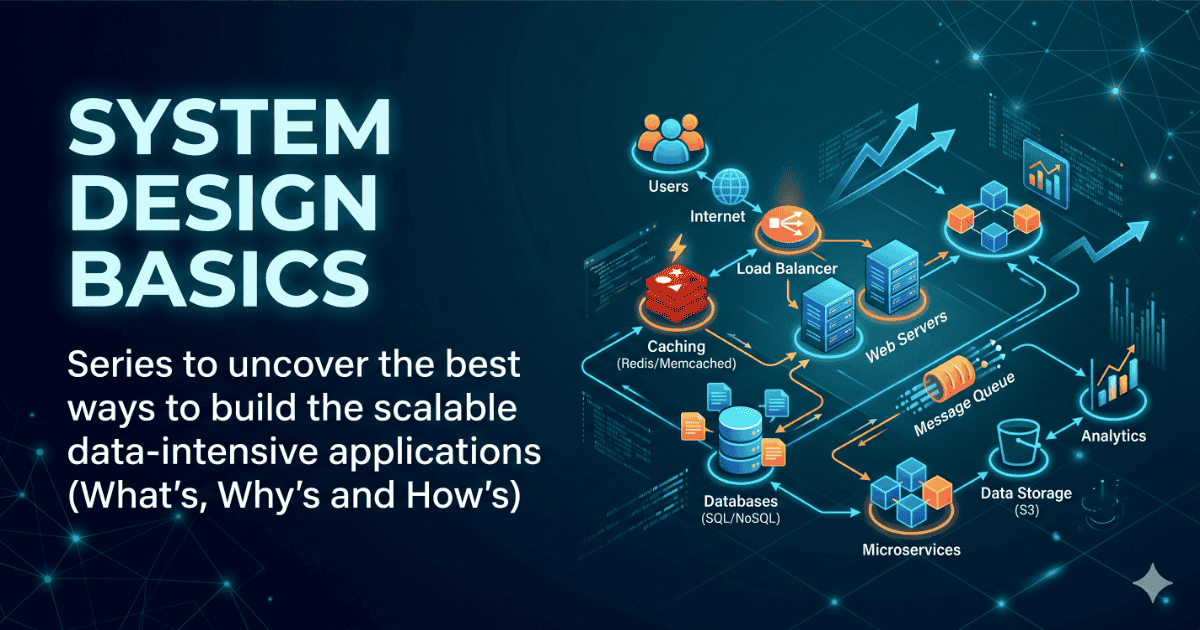
System Design Basics
Series to uncover the best ways to build the scalable data-intesive applications (What's, Why's and How's)
Chapters
- 01Demystifying Idempotency: The Foundation of Reliable Distributed Systems
- 02Idempotency in Payments: The Client-Generated Key Approach
- 03Idempotency in Payments: The Backend-Generated Key Approach
Payment Systems
The Complete Developer's Guide to Payment Systems
Chapters
- 01Demystifying Idempotency: The Foundation of Reliable Distributed Systems
- 02Idempotency in Payments: The Client-Generated Key Approach
- 03Idempotency in Payments: The Backend-Generated Key Approach
In Idempotency in Payments: The Client-Generated Key Approach we looked at using client generated UUIDs for idempotency. It works well, but it has a big flaw: you are relying entirely on the frontend to behave.
If an app crash during a payment, loses its local state, and the user tries again, the frontend will just generate a new UUID. Your backend will see this new key, think it's a fresh request, and bam—double charge. Also, hackers can just generate floods of random UUIDs to script-test stolen credit cards against your API.
If you want to build a really robust payment system (like how Stripe or Razorpay does it), you need to shift the control to the backend using a Two-Phase Order Creation pattern.
The Two-Phase Flow
In this setup, the client can't just hit a POST /charge endpoint out of nowhere. The flow is split into two steps, and the backend generates the ID, which tightly couples the payment to a real row in your database.
Phase 1: Intent Creation
The frontend tells the backend, "Hey, I want to create an order for these cart items." The backend does the math, creates an Order row in your SQL database with a status of PENDING, and gives back a unique OrderID.
Phase 2: Execution
Now the client calls the actual payment gateway, passing that backend-generated OrderID instead of some random UUID. This OrderID becomes your idempotency key.
Why This Architecture is Better
1. Database-Level Integrity
Look at Phase 2. We are using a row lock (SELECT ... FOR UPDATE in Postgres/MySQL). Because the payment is tied directly to a physical row in your primary DB, we don't even need a separate Redis cache to track keys. The order's status column acts as the absolute source of truth.
2. Payload Control
With client UUIDs we had to hash the payload to make sure they didn't change the amount on a retry. With backend keys, we don't care. The client can't change the amount because the payment gateway just fetches the expected amount directly from the database using the OrderID. The client is just saying "execute payment for this order," nothing else.
3. Crash Resilience
If the client app crashes between Phase 1 and Phase 2, the order just sits there as PENDING in your database. When they open the app again, it fetches pending orders, sees ORD-789, and resumes the payment. There's zero risk of them accidentally generating a new intent and getting charged twice.
Wrap Up
If you are dealing with money, idempotency is non-negotiable. While GET and PUT are naturally safe, you have to protect POST requests from automated network retries.
Whether you go with the simple Redis Client-UUID approach, or the heavier database Two-Phase approach, putting idempotency in place ensures your system can survive the messy reality of the internet. Build for failure, and you'll sleep better when you're on call.
Related Posts
Idempotency in Payments: The Client-Generated Key Approach
Before making a payment request, the client app (like your React frontend or Android app) generates a unique string representing the *intent* of the transaction. Usually we just use a V4 UUID.

Demystifying Idempotency: The Foundation of Reliable Distributed Systems
In the world of distributed systems, networks are inherently unreliable. Requests get dropped, database connections stall, and packets vanish into the void. To combat this, we build systems that automatically retry failed operations. But retries introduce a dangerous new problem: what happens if the original request actually succeeded, but the acknowledgment was lost?
Hello World: Building This Blog
A deep dive into how I built this blog using Next.js, MDX, and a custom design system with light/dark theme support.